Navigating the “VIP Club” of HTTPS: How to Handle Certificates in Isolated Environments
If you’ve ever built a secure, distributed application, you know the drill: modern authentication services demand HTTPS. Try passing OpenID or Keycloak tokens over plain HTTP, and the system will—rightfully—refuse to work.
But how does your device (Windows, Android, iOS, or even a Docker container) actually know if a secure connection is trustworthy?
It all comes down to an exclusive “VIP Club” of Certificate Authorities (CAs).
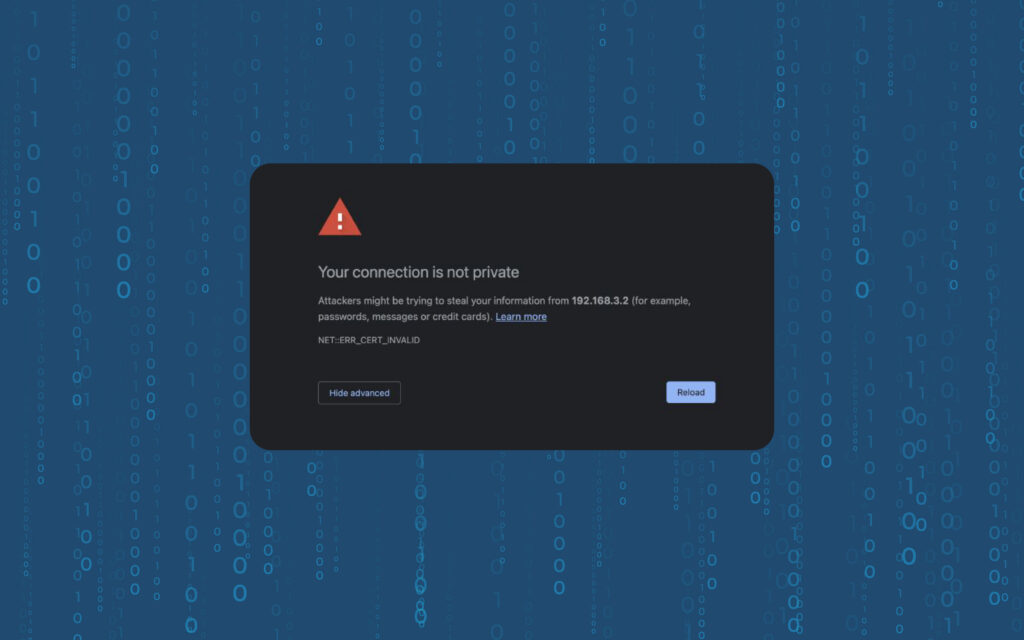
Device manufacturers and OS developers pre-load their systems with a list of default, trusted CAs. If an external website’s certificate is signed by one of these club members, traffic flows smoothly. If it isn’t, the browser throws an alarming error, and API calls instantly fail.
If you want zero configuration headaches, you simply buy a certificate from a CA in the club. But what happens when you can’t?
The Edge Case: When Public CAs Aren't an Option
There are critical scenarios where using public CAs is impossible. You might be dealing with unroutable or internal namespaces (e.g., .internal or .local), or building an isolated laboratory network that must remain completely disconnected from the outside world for reasons of strict secrecy or privacy.
In these cases, you are forced to become your own Certificate Authority.
While setting up a Local CA is straightforward, managing the “chain of trust” across containerized microservices is where things often break down. Let’s look at a real-world scenario and how to fix it.
The Scenario: Docker, Keycloak, and the Local Lab
Imagine you have an internal application running in a Docker container that needs to authenticate against a local Keycloak service. The Keycloak server’s HTTPS certificate is signed by your Local CA.
Suddenly, your container’s API requests are rejected. The error? Untrusted Certificate.
Here is exactly how to solve this at the infrastructure level.
- Inject the Local CA into the Container’s Trust Store Your container’s OS doesn’t know your custom CA. You must mount the CA certificate and explicitly add it to the container’s trusted store.
In your docker-compose.yml, mount the certificate as read-only:
YAML
services:
your-application:
volumes:
– /conf/etc/cert/certs/server/local_CA/local-lab_CA.crt:/usr/local/share/ca-certificates/local-lab_CA.crt:ro
Next, ensure your container image actually updates its trust store on startup. For a Debian/Ubuntu-based Dockerfile:
Dockerfile
RUN apt-get update && apt-get install -y –no-install-recommends ca-certificates && rm -rf /var/lib/apt/lists/*
CMD update-ca-certificates && exec <your-application-command>
- Stop using 127.0.0.1 (The Hostname Trap) A common developer mistake is testing the connection inside the container using the loopback IP: curl -v [https://127.0.0.1/](https://127.0.0.1/)
Even if the CA is trusted, this will fail. Why? Because the certificate was issued for a specific Fully Qualified Domain Name (FQDN)—for example, reslevis.local-lab.internal. Certificate validation requires the hostname to match exactly.
You must always use the configured hostname: curl -v [https://reslevis.local-lab.internal/](https://reslevis.local-lab.internal/)
Consequently, your application’s OpenID issuer URL, authorization URL, and token URL must strictly use this FQDN, never localhost or the container IP.
*Pro-tip: If you want to test if the CA is the issue before modifying the Dockerfile, you can explicitly pass the cert to curl: curl –cacert /usr/local/share/ca-certificates/local-lab_CA.crt -v [https://reslevis.local-lab.internal/](https://reslevis.local-lab.internal/)
The Golden Rule of Configuration
Once your trust store is updated and your FQDNs match, your HTTPS connections to local auth services will work flawlessly.
However, remember one final architectural rule: Never hard-code these values.
Hostnames, URLs, certificate paths, and CA references are highly environment-specific. What works in your Local Lab will break in Staging or Production. Always externalize these parameters and inject them as environment variables so your container image remains portable across any deployment.